
Calf Care 360
A multi-layered approach to Neonatal
Calf Diarrhoea, addressing calf health
through five pillars of care
Why?
The risk of neonatal calf diarrhoea (NCD)
A common challenge
- Approximately 20% of calves will develop NCD1–3
- NCD may be caused by Cryptosporidium parvum, enterotoxic Escherichia coli (ETEC), Salmonella, bovine rotavirus, bovine coronavirus, Eimeria species and inappropriate nutrition1,4
- Many outbreaks are caused by multiple pathogens, making accurate diagnosis difficult4
With devastating results
- NCD accounts for 40–50% of calf mortalities in the first month1,4
- NCD affects growth, productivity and long-term herd performance
- NCD leads to significant economic losses1
The financial burden of Cryptosporidium parvum infection can be up to €140 per infected calf5
How?
Introducing Calf Care 360
A multi-layered approach to neonatal calf diarrhoea, addressing calf health through five pillars of care

Biosecurity
Proven hygiene solutions combined with a smart platform to assess and strengthen biosecurity where it matters most
View more

Diagnostics & Monitoring
Fast, accurate on-farm testing for early, targeted intervention and better outcomes
View more

Knowledge
An understanding of pathogens, risk factors and best practices to support healthy growth in calves
View moreSpotlight


Observation based monitoring tool – early detection of calf health issues powered by CowSignals

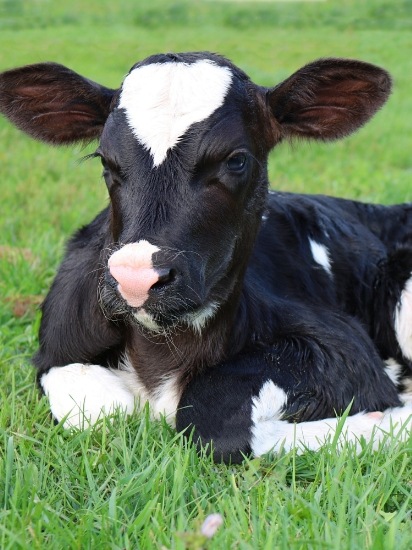
Taking care of every angle
- The first few weeks of a calf’s life are critical for building health and strength
- NCD is common in calves and has high mortality
- Calf Care 360 delivers complete solutions to help you reduce risk, optimise calf health and safeguard herd performance
Because when you take care of every angle, you give calves the best chance to thrive
What’s new
NEW Huvepharma Publications
Effects of Clostridium butyricum supplementation on gut microbiota, intestinal and ruminal integrity, and growth performance in dairy calves
S. Vázquez-Flores1, D. Galindo2, P. Flores2, J. Carrisoza3, J.M. Ruvalcaba4, R.P. Esteves-Lopes2.
1Tecnológico de Monterrey, Querétaro, México; 2Huvepharma NV, Antwerp, Belgium; 3Pathology Department, FMVZ, UNAM, Ciudad de México, México; 4Campo Experimental Centro Altos de Jalisco, INIFAP, Tepatitlán de Morelos, Jalisco, México.
Poster P-167, World Buiatrics Congress 2026, Istanbul.
Paromomycin Sulphate for Early Control of Cryptosporidiosis in Dairy Calves: Efficacy Across Diverse Production Systems
S. Vázquez Flores1, R. Esteves Lopes2, S. Barrera Almanza1.
1Tecnológico de Monterrey, Querétaro, México; 2Huvepharma NV, Antwerp, Belgium.
Poster P-168, World Buiatrics Congress 2026, Istanbul.
Is the treatment of diarrhoeic calves with paromomycin sulphate, at the height of Cryptosporidium parvum infection, safe and effective?
C. Ramage1, D. Reddick1, P.M. Bartley2, R. Esteves Lopes3, F. Katzer2.
1Moredun Scientific, Pentland Science Park, Edinburgh, EH26 0PZ, United Kingdom; 2Moredun Research Institute, Pentland Science Park, Edinburgh, EH26 0PZ, United Kingdom; 3Huvepharma®, Uitbreidingstraat 80, B-2600 Antwerp, Belgium.
Poster P-430, World Buiatrics Congress 2026, Istanbul.
Efficacy of paromomycin sulfate in reducing Cryptosporidium parvum infection and diarrhea in dairy calves: a field-based trial in Argentinian field conditions
J.A. Lombardelli1,2, C. Catracchia2, A. McLougling3, R. Esteves Lopes4.
1Facultad de Agronomía y Veterinaria, Universidad Nacional de Río Cuarto, Córdoba, Argentina; 2APSAVET, Argentina; 3AMALGAMAR S.R.L., Buenos Aires, Argentina; 4Huvepharma NV, Belgium.
Poster P-523, World Buiatrics Congress 2026, Istanbul.
Paromomycin preserves gut microbiota development while controlling neonatal diarrhea in preweaned dairy calves
B.P. Santarosa1, M.P. Branco1, G.L. Marques1, K.N. Da Silva1, A.L. Lelis1, G.M. Januário2, G.G. Silveira3, L. Queiroz4, T.S. dos Santos4, B. Ilha4, V. Gomes4, R. Esteves Lopes5.
1Huvepharma®, Porto Alegre, Brazil; 2Department of Internal Medicine, School of Veterinary Medicine and Animal Science, University of São Paulo, Brazil; 3Federal University of the Jequitinhonha and Mucuri Valleys, Brazil; 4Karaja Biosciences, São Carlos, São Paulo, Brazil; 5Huvepharma® NV, Antwerp, Belgium.
Poster P-556, World Buiatrics Congress 2026, Istanbul.
Paromomycin reduces diarrhea frequency and oocysts shedding compared with halofuginone in dairy calves naturally exposed to Cryptosporidium parvum
B.P. Santarosa1, M.P. Branco1, G.L. Marques1, K.N. Da Silva1, A.L. Lelis1, G.M. Januário2, G.G. Silveira3, R. Esteves Lopes4.
1Huvepharma®, Porto Alegre, Brazil; 2Department of Internal Medicine, School of Veterinary Medicine and Animal Science, University of São Paulo, Brazil; 3Federal University of the Jequitinhonha and Mucuri Valleys, Brazil; 4Huvepharma® NV, Antwerp, Belgium.
Poster P-557, World Buiatrics Congress 2026, Istanbul.
Transforming calf health under commercial conditions: paromomycin reduces diarrhea morbidity and improves growth performance
B.P. Santarosa1, L.M. Padilha2, Á.M. Shiota3, P.C.M.D. Vieira3, N.C. Sousa3, A.A. da Silva3, E.D. Silva Júnior3, K.N. da Silva1, A.L. Lelis1, M.P. Branco1, L. Cruz4, R. Esteves Lopes5.
1Huvepharma, Porto Alegre, Brazil; 2Department of Internal Medicine, School of Veterinary Medicine and Animal Science, University of São Paulo, Brazil; 3SOMMA + agrobusiness, Patos de Minas, Brazil; 4Biogenesis Bagó, Curitiba, Brazil; 5Huvepharma NV, Antwerp, Belgium.
Poster P-558, World Buiatrics Congress 2026, Istanbul.
References:
1. van Mol, W., Clinquart, J., Pas, M.L., Bokma, J. and Pardon, B. (2022). Pathogen-oriented approaches for neonatal calf diarrhoea. Vlaams Diergeneeskundig Tijdschrift, 91. 167-181. 2. Bartels, C.J.M., Holzhauer, M., Jorritsma, R., Swart, W.A.J.M. and Lam, T.J.G.M. (2010). Prevalence, prediction and risk factors of enteropathogens in normal and non-normal faeces of young Dutch dairy calves. Preventative veterinary medicine, 93(2-3). 162-169. 3. Windeyer, M.C., Leslie, K.E., Godden, S.M., Hodgins, D.C., Lissemore, K.D. and LeBlanc, S.J. (2014). Factors associated with morbidity, mortality and growth of dairy heifer calves up to 3 months of age. Preventative veterinary medicine, 113(2). 231-240. 4. Potter, T. (2015). Neonatal calf scour - diagnosis, prognosis and treatment options. Vet Times, January 5. https://www.vettimes.co.uk/app/uploads/wp-post-to-pdf-enhanced-cache/1 neonatal-calf-scour-diagnosis- prognosis-and-treatment-options.pdf. Accessed 10 March 2025. 5. Roblin, M., Canniere, E., Barbier, A., Daandels, Y., Dellevoet-Groenewegen, M., Pinto, P., Tsaousis, A., Leruste, H., Brainard, J., Hunter, P.R. and Follet, J. (2023). Study of the economic impact of cryptosporidiosis in calves after implementing good practices to manage the disease on dairy farms in Belgium, France, and the Netherlands. Current research in parasitology & vector-borne diseases, 10:4:100149. 6. Scottish Government. Biosecurity practices for animal health: guidance. Available online at: https://www.gov.scot/publications/biosecurity-practices-for-animal-health-guidance/ Accessed 7 March 2025. 7. Megnanck, V., Hoflack, G. and Opsomer, G. (2014). Advances in prevention and therapy of neonatal dairy calf diarrhoea: a systematical review with emphasis on colostrum management and fluid therapy. Acta veterinaria Scandinavia, 56(1). 75. 8. Vega, C.G., Bok, M., Ebinger, M., Rocha, L.A., Rivolta, A.A., Thomas, V.G., Muntadas, P., D’Aloia, R., Pinto, V., Parreño, V. and Wigdorovitz, A. (2020). A new passive immune strategy based on IgY antibodies as a key element to control neonatal calf diarrhea in dairy farms. BMC veterinary research, 16(1). 264.